Category: Uncategorized
Cebu City’s Majestic Spots.

Cebu Taoist Temple
Beverly Hills Subdivision Cebu, City.
(Temple)
The Temple is a worshiping center for Taoism. In 1972, the Temple was built by Cebu’s substantial Chinese community. Some guide books and travel agencies offer trips to the temple or as a side-trip in a tour around Cebu City. But it is more popular with grade school students.

Heritage of Cebu Monument
Sikatuna St., Cebu, City
(Monument, history, architecture)
The monument was constructed as early as July, 1997 and was finished on December, 2000. Local artist Eduardo Castrillo built the sculptures of the Cebu Heritage Monument. He and the late Senator Marcelo Fernan together with donations from other private individuals and organizations funded the construction of the monument.

Magellan’s Cross
P. Burgos St. Cebu,City
( History)
Ferdinand Magellan ordered the Spanish and the Portuguese to built the cross upon arriving in the Philippines. This cross is housed in a chapel next to the Basilica Minore del Santo Niño on Magallanes Street just in front of the city center of Cebu City.

Fort San Pedro
A. Pigaffeta Street, Cebu, City
( Museum)

Basilica del Santo Niño
Osmeña Boulevard, Cebu, City.
(Basilica and church)
 Carbon Market
Briones St. Cebu, City.
( market place)
 Colon Market
Cebu, City
(Shopping)
 Tops Lookout.
Cebu tops rd., Cebu, City
(Overview)
 Sky Experience Adventure
Osmeña Blvd. Cebu, City
( Adventure)
Food ♥
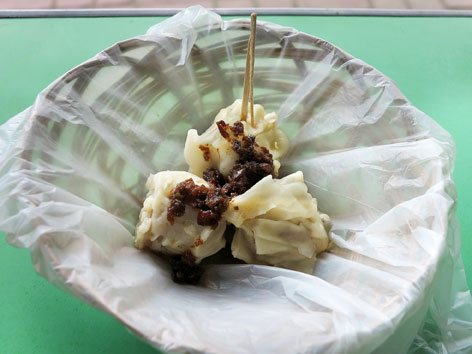
Siomai sa Tisa
What: Siomai (“sho-my”) are steamed Chinese pork dumplings, and one of the few food items that’s retained its Cantonese name (alternative spellings include siumai or shaomai) since arriving to Philippine shores. Thus, siomai sa Tisa originally referred to eating siomai at Tisa.
Where: A humble chain called D’Original Siomai sa Tisa claims to sell the original siomai sa Tisa in more accessible locations.
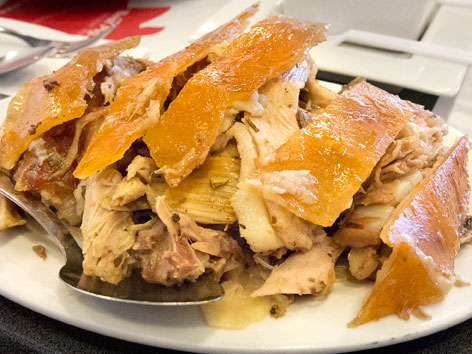
Lechon Baboy
What: Lechon (“leh-chon”)—or, to be specific, lechon Cebu— is a young pig stuffed with a secret mix of herbs and spices (usually including star anise, spring onions, lemongrass), skewered on a bamboo pole and roasted whole over hot coals.
Where: Zubuchon (032-2395697; One Mango Ave. Bldg., Gen. Maxilom Ave., map)
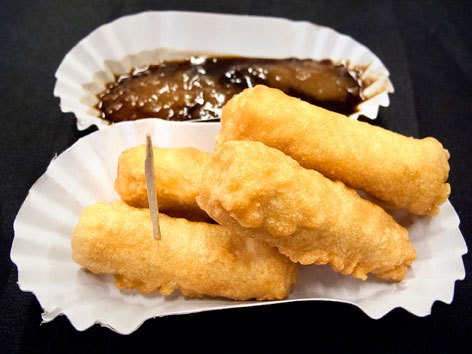
Ngohiong
What: In Cebu, ngohiong (“ngo-yong”) is the local kin of a spring roll: a deep-fried, battered rice-paper roll containing julienned singkamas (jicama) and/or ubod (technically heart of (coconut) palm, but may also refer to bamboo shoots), ground pork, minced shrimps, garlic, and onions.
Where: We wanted ngohiong that hadn’t been mass-fried at 8am and steeped in grease by noon, a practice many ready-to-eat ngohiong eateries are guilty of. We found what we wanted at Small Eats Asian Street Food, a hawker-style stand at BTC, or Banilad Town Center (near the Banilad fly-over on Gov. M. Cuenco Ave.), that pops ngohiong into a deep fryer as it is ordered.
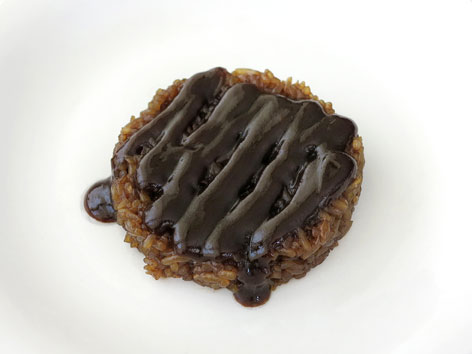
Biko
What: Biko (“bee-koh”) is a delicious cake made of sticky (glutinous) rice, coconut milk, and sugar, usually topped with a caramelized coconut-milk-and-sugar reduction called latik (“lah-tik”).
Where: Chika-an sa Cebu (032-233-0350; Salinas Dr., Lahug, map) has been serving quality Cebuano cuisine for more than 30 years and nearly always carries biko on its menu.

Budbud Pilit
What: Budbud (“bood-bod”) is usually a rice cake snack or dessert wrapped in banana leaves, while pilit (“pee-lit”), which means “to stick,” refers to the variety of glutinous/sticky rice that’s used in budbud pilit.
Where: One of the best places to experience pilit is at Laguna Garden Café(Biliran Rd., The Terraces, Ayala Center Cebu, map), where the budbud pilit is paired with ripe mangos and hot chocolate.

Pork Sisig
Sisig is a famous Filipino dish especially (pulutan) and it is made from parts of pig usually seasoned with chilli and calamansi.

Kare-Kare
Kare-kare is a Philippine stew complemented with a thick savory peanut sauce. It is made from a variation base of stewed oxtail, pork hocks, calves feet, pig feet, beef stew meat, and occasionally offal or tripe. Kare-kare can also be made with seafood or vegetables.

Pork Sinigang
Sinigang is a Filipino soup or stew that is very popular and characterized by its sour and savoury taste most often associated with tamarind (sampalok) and mix with other vegetables . It is one of the more popular viands in Filipino Cuisine , and is related to the Malaysian dish singgang. Very easy to cook and tasty.

Chicken Adobo
Philippine adobo is a popular Filipino dish and cooking process in Filipino cuisine that involves meat, seafood, or vegetables marinated in vinegar, soy sauce, garlic, and black peppercorns, which is browned in oil, and simmered in the marinade.

Halo-Halo
Haluhalo or Halo-halo is a popular Filipino cold dessert which is a concoction of crushed ice, evaporated milk and various ingredients including, among others, sweetened beans, coconut julienes, sago, gulaman, pinipig rice, boiled root crops in cubes, fruit slices, flan, and topped with a scoop of ice cream.
Culture
FESTIVAL’s
Cebu is not just popular because of it’s wonderful places,It is also known for having one of the most colorful,popular and the grandest festival in the Philippines which SINULOG FESTIVAL.It is celebrated every 3rd Sunday of January in honor of their very own Senior Sto. Niño. Sinulog is a dance prayer expressing devotion to the child Jesus Christ.It is to honor the Holy child.The highlights to the festival is the street dancing where colorful costume’s and merrymakers can be seen.People in Cebu love festivals and they celebrate it with excitement and high spirits. Sinulog is not just the only festival that is celebrated in Cebu, there are also festivals that is celebrated in their cities,municipalities and even barangays. Cebu celebrated festivals with religious rituals and dancing in the streets to the beat of the drums.


CEBUANO’S LANGUAGGE
Cebuano is a common native language in the Visayan Region,they are a member of Austronesian people.Their language have been already used in Proto-Austronesian era in Sugbo(Cebu). Cebu was governed from Spain and Mexico, and as a result received heavy Spanish and Mexican influence.


CRAFTS
One thing Cebuanos and Visayans in general are remarkable for is their culturally rich and artistic.One of the best crafts of cebuano’s that became popular in the Philippines was the “Guitar”.Cebu have also become known as the Guitar haven in the country and because of this crafting a guitar have developed due to the changes of generation. Cebuano’s are also good in carving wood to form statues and souvenirs.Not only carvings but also embroidery,seashell handcrafts and especially Cebu’s finest liquor “TUBA”.


The Journey Begins
Join me as we discover what’s in Cebu.
Good company in a journey makes the way seem shorter. — Izaak Walton

 UBECsdestination